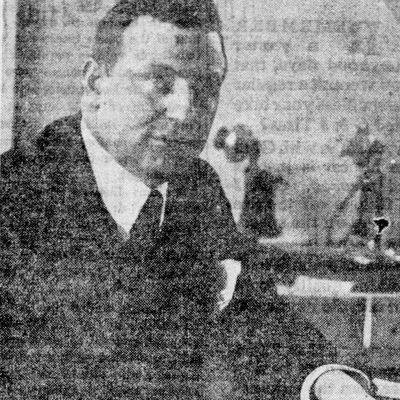
Francis Joseph William Ford
Appointed by President Franklin D. Roosevelt in 1938 and confirmed by voice vote, Francis Joseph William Ford was a Judge on the U.S. District Court for the District of Massachusetts. He earned a law degree from Harvard Law School in 1906. Rulings & record ↓ Sources ↓
- Lived
- 1882–1975
- Appointed by
- Franklin D. Roosevelt, 1938
- Confirmed
- by voice vote
- Education
- Harvard College 1904 · Harvard Law School 1906
- Succeeded by
- Joseph Louis Tauro
Federal judicial service
| Year | Court | Appointed by | Vote |
|---|---|---|---|
| 1938 | District of Massachusetts | F.D. Roosevelt (D) | Voice vote |
Party letters show the appointing president’s party, not the judge’s own. A voice vote means the chamber approved aloud. No senator-by-senator tally is recorded.
Confirmation vote
Voice vote
The Senate approved this confirmation aloud, with no senator-by-senator tally recorded. Recorded roll-call votes begin in 1989.
Education
| Harvard College | A.B. | 1904 |
| Harvard Law School | LL.B. | 1906 |
Before the bench
Professional career before and outside the federal bench, as recorded by the Federal Judicial Center.
| Private practice, Boston, Massachusetts | 1906-1933 |
| City councilman, Boston, Massachusetts | 1917-1922 |
| U.S. attorney for the District of Massachusetts | 1933-1938 |
| Member, Judicial Conference of the United States | 1961-1967 |
Judicial Record
In our data, Ford authored 153 published opinions for the court (1938–1972). Most cited: Samson Crane Co. v. Union Nat. Sales, Inc. (66 citations).
A selective record from published opinions in the CourtListener corpus, not every ruling; most unpublished district orders are not included. Counts and rankings are objective and recomputable: how we count. We describe the record, not the judge.
Recent & notable rulings
| Year | Case | Citation | Cited |
|---|---|---|---|
| 1949 | Samson Crane Co. v. Union Nat. Sales, Inc. | 87 F. Supp. 218 | 66 |
| 1966 | Commonwealth of Massachusetts v. Connor | 248 F. Supp. 656 | 36 |
| 1967 | Rosenberg v. Rudnick | 262 F. Supp. 635 | 33 |
| 1957 | Miley v. John Hancock Mutual Life Insurance Co. | 148 F. Supp. 299 | 33 |
| 1961 | Worthen v. United States | 192 F. Supp. 727 | 31 |
| 1955 | Chorney v. Callahan | 135 F. Supp. 35 | 30 |
| 1954 | United States v. Reckis | 119 F. Supp. 687 | 27 |
| 1938 | Nichols v. Sanborn Co. | 24 F. Supp. 908 | 25 |
| 1959 | Secatore's, Inc. v. Esso Standard Oil Company | 171 F. Supp. 665 | 24 |
| 1949 | A. J. Goodman & Son, Inc. v. United Lacquer Mfg. Corp. | 81 F. Supp. 890 | 24 |
| 1948 | Hazeltine Research, Inc. v. Automatic Radio Mfg. Co. | 77 F. Supp. 493 | 24 |
| 1942 | Bowen v. Yankee Network, Inc. | 46 F. Supp. 62 | 24 |
| 1947 | United States v. Chandler | 72 F. Supp. 230 | 21 |
| 1947 | The Four Sisters | 75 F. Supp. 399 | 20 |
| 1968 | Selectmen of the Town of Nahant v. United States | 293 F. Supp. 1076 | 17 |
Showing the 15 most-cited of 153 authored opinions in our data. “Cited” is inbound citations across the CourtListener corpus. Case links open the ruling’s full text (CourtListener) or its page here; read the methodology and verify against the primary source.
Questions & answers
- Who appointed Francis Joseph William Ford?
- President Franklin D. Roosevelt appointed Francis Joseph William Ford to the U.S. District Court for the District of Massachusetts in 1938.
- Was Francis Joseph William Ford appointed by a Democrat or a Republican?
- Francis Joseph William Ford was appointed by President Franklin D. Roosevelt, a Democrat. JudicialFinder records the appointing president's party, not a judge's own politics.
- What was Francis Joseph William Ford's confirmation vote?
- Francis Joseph William Ford was confirmed by voice vote on June 15, 1938. No senator-by-senator tally was recorded.
- Which court was Francis Joseph William Ford on?
- Francis Joseph William Ford was a Judge on the U.S. District Court for the District of Massachusetts.
Sources
Each fact on this page traces to a primary public record.
- FJC Biographical Directory
- Wikidata
- Portrait: The Boston Globe (Public domain), via Wikimedia Commons
- CourtListener bulk data (Free Law Project): authored opinions & citation counts
How we source & reconcile data → Data & Sources
See something wrong? Report an error. Fixes are logged in the corrections log.
36 years on the U.S. District Court for the District of Massachusetts. Data as of 2026-09-28. Informational only; verify against the primary source before relying. Not a consumer report (FCRA).